Article: How To Pressure Wash a Log Cabin and Avoid Damage
How To Pressure Wash a Log Cabin and Avoid Damage
Pressure washing is a common cleaning method used to remove dirt and buildup from a log cabin exterior. But when done improperly, the water pressure can damage the wood, including raised grain, gouges, and moisture intrusion.
How do you pressure wash a log cabin and avoid damage along the way? These tips cover the details you need to watch from the first spray to the final drying period so you can clean the logs without creating another repair project.
Check The Logs Before You Start

Look over every wall before you turn on the washer. Cracks, soft or spongy wood, and areas where the old finish has already peeled need attention before water touches them. Pressure washing over damaged wood pushes water deeper into those weak spots, and that trapped moisture leads to rot you won't notice until it's already spread. If you find soft wood, let a professional check it first.
Pick A Pressure Washer With the Right PSI
Log cabin exteriors need lower pressure than concrete or brick. A washer rated between 1,200 and 1,900 PSI removes dirt and loose finish without tearing into the wood grain. Anything higher starts to etch the surface, opening it up to water damage and making the next coat of finish harder to apply evenly. Gas-powered units tend to run higher PSI by default, so if you're using one, check the settings before starting and dial it down if the lowest option still feels aggressive on a test patch.
Use A Wide-Angle Nozzle
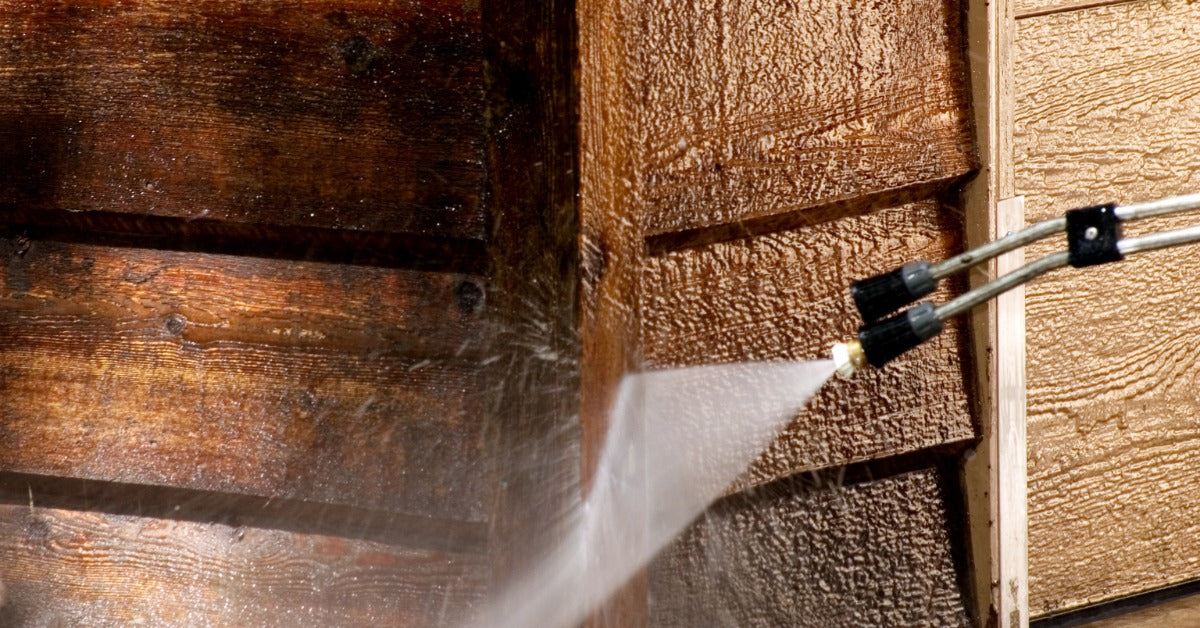
A narrow, concentrated spray digs channels into softwood species like pine and cedar, even at moderate PSI. A 25- to 40-degree nozzle spreads the water over a larger area, cutting the force at any single point. That wider spread still lifts dirt and mildew while keeping the wood surface intact. Some nozzle kits label these by color instead of degree, so check the packaging or the washer's manual if the numbers aren't marked directly on the tip.
Keep The Nozzle Moving
Holding the nozzle still on one spot, even for a few seconds, concentrates enough force to gouge the wood or blast away sound finish. Sweep the spray in smooth, continuous passes following the direction of the log grain. This keeps pressure distributed and prevents uneven removal that leaves patchy, blotchy walls once the logs dry. Overlapping each pass slightly also helps you avoid faint stripe patterns where one section got more water contact than the section next to it.
Maintain a Safe Spray Distance
Standing too close to the wall multiplies the force hitting the wood, regardless of what PSI your washer is set to. Keep the nozzle 12 to 18 inches from the surface as a starting point, and test on a small hidden section first. If the wood fibers start to fuzz up or splinter, back off further before continuing.
Work From the Top Down
Washing from the top down lets gravity work in your favor. Dirty runoff from the upper logs drips onto the sections below that you haven't cleaned yet, and you rinse that grime away when you reach those rows. If you wash bottom to top instead, dirty water streaks down over walls you already cleaned, and those streaks can dry into the wood before you get back to rinse them off.
Watch For Water Intrusion at Joints
Log cabins have countless seams: where logs stack, where they meet at corners, and where chinking or caulking seals the gaps. Direct spray away from these joints as much as possible. Water forced into a seam can sit trapped between logs for weeks, and that sustained moisture is one of the leading causes of rot in log structures. Older cabins with worn or cracked chinking are especially vulnerable here, so a quick inspection of the caulking before you wash can save you from pushing water into a gap that was already failing.
Protect Windows, Doors, And Fixtures
Light fixtures, window seals, and door frames aren't built to handle the same pressure as solid log walls. Cover them with plastic sheeting and painter's tape before you start, or route your spray pattern around them entirely. Water forced behind a window seal can seep into the wall cavity, leading to hidden damage that's far more expensive to fix than the cleaning itself.
Let The Logs Dry Completely
Wood that looks dry on the surface can still hold moisture well below it. Give the logs at least 48 to 72 hours to dry before applying any stain or sealant, and longer if the weather has been humid or overcast. Sealing over damp wood traps that moisture inside, which leads to peeling finish and mold growth underneath the new coat.
Skip The Harsh Chemicals
Bleach and other harsh cleaners strip natural oils from the wood and can react poorly with existing finish, leaving discoloration that's difficult to reverse. A low pH cleaner like Cabin Clean formulated specifically for log homes breaks down mildew and grime without damaging the wood fibers or interfering with the stain you plan to apply afterward. Apply Cabin Clean starting at the bottom of the wall and work your way up to avoid streaks. Rinse from the top down.
Test An Inconspicuous Area First
Before washing the full exterior, test your pressure, nozzle angle, and distance on a small section that's out of view, like a spot behind a bush or near a foundation corner. This lets you catch any damage on a small scale rather than discovering a problem after you've already worked across the entire cabin.
Reapply Finish Promptly After Washing

Pressure washing strips away some of the log's existing protective coating even when done correctly. Once the wood is fully dry, apply a new coat of stain or sealant within a few days. Bare wood left exposed to sun and rain starts graying and weathering fast, undoing the benefit of the cleaning you just did.
Keep Pressure Washing Part of Proper Log Care
Properly pressure washing a log cabin and avoiding damage takes patience and careful technique, but don't let the potential for damage scare you away from using this tried-and-true method for exterior cleaning.
At Timeless Woodcare Products, we sell the log home supplies you need to keep your cabin protected year-round, from exterior cleaners to wood treatments. Pair pressure washing with regular inspections and maintenance using our products, and your log cabin will remain ready for the seasons ahead.